
The Mercy Seat
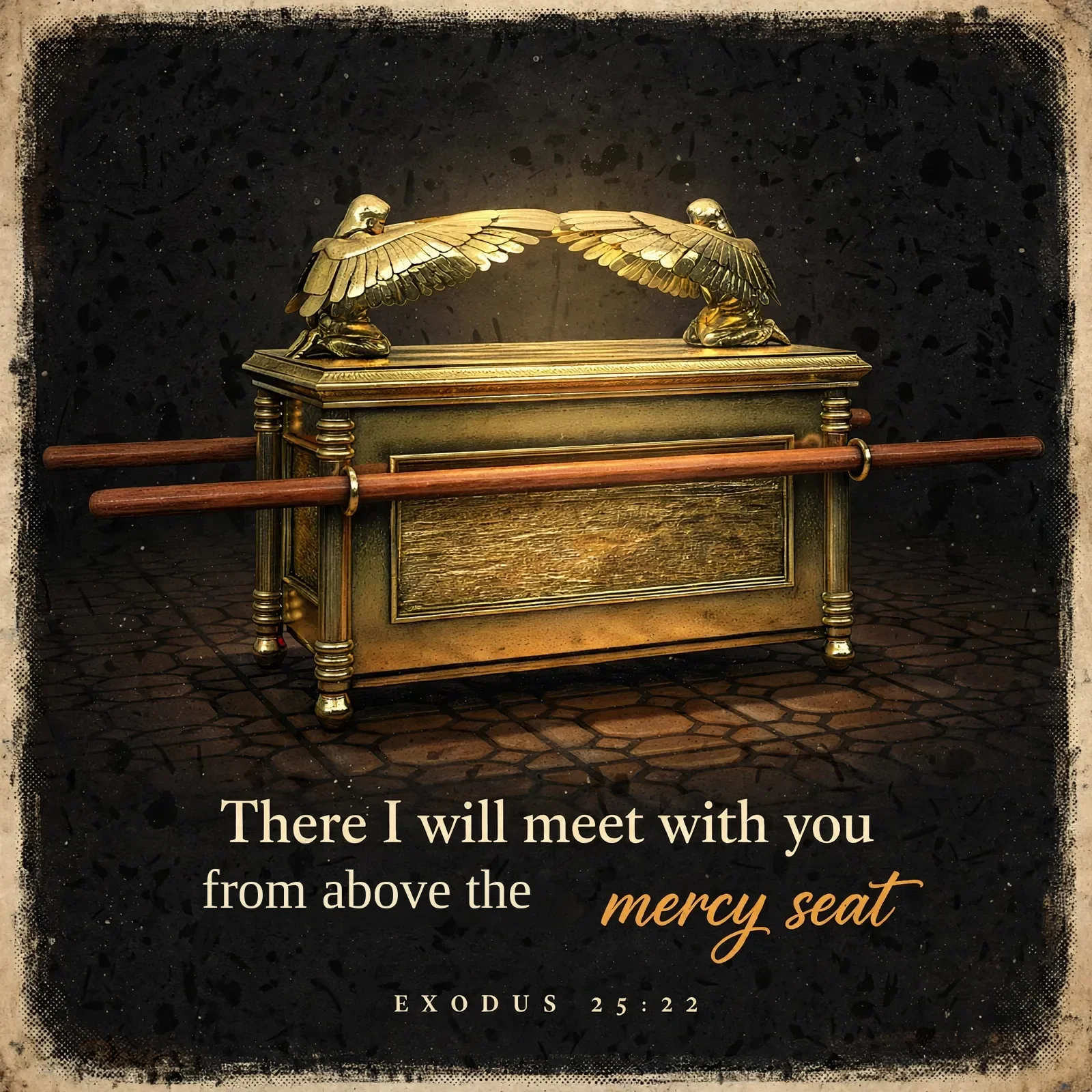
"There I will meet with you, and I will tell you from above the mercy seat, from between the two cherubim which are on the ark of the covenant, all that I command you for the children of Israel." - Exodus 25:22
Before Israel built the tabernacle, God declared its purpose: he would dwell among his people. He instructed Moses to build the ark, place the tablets of the covenant inside it, and cover it with a lid of solid gold, with two cherubim of hammered gold rising from the cover, wings outstretched, facing one another. Above this cover, between the wings, God would meet with Moses and speak.
The gold cover was called the mercy seat. Here, at the heart of Israel's worship, stood both the testimony of God's holiness and his way for a sinful people to live near him. Within the ark lay the commands of the covenant. On its cover, the high priest would sprinkle sacrificial blood to make atonement for their sins.
God's desire to dwell among them did not make their sin insignificant. His presence was holy. When Aaron entered the inner sanctuary on the Day of Atonement, he came with sacrificial blood for himself and for the people. He sprinkled it on and before the mercy seat, making atonement for the sanctuary because of Israel's uncleanness and rebellion (Leviticus 16:14–16). The God they had sinned against made the way for them to remain near him.
And from this place, God spoke. Numbers 7:89 records Moses entering the tent and hearing God's voice from above the mercy seat, between the cherubim. The promise became an encounter. "There I will meet with you" meant that Moses would enter, listen, and receive the word of the living God.
God's mercy brought Moses near, and God's voice met him there. We can become so preoccupied with whether we are welcome that we never settle our hearts to listen.
We rehearse our failures, measure our sincerity, and wonder whether we have done enough to be welcomed. Shame keeps us at a distance. Pride persuades us to bring evidence that we deserve to come near.
But God himself has provided the meeting place.
In Romans 3:25, Paul describes Jesus as the atoning sacrifice, using the italicized Greek word hilastērion, the same Greek word used for the mercy seat. Through Christ's blood, God has opened the way for guilty people to approach him.
Jesus has offered himself once for all. Our forgiveness rests on his finished work. We can bring our actual lives before God, including the sin we are ashamed to name, the failure we cannot undo, and the conscience we cannot quiet, and trust that Christ's blood is sufficient.
Then we can lift our eyes to the One who welcomes us and hear from him.
Forgiveness opens into fellowship. We are cleansed so that we can draw near, worship, listen, and live with him. The God who spoke to Moses desires a people who know him. Through the blood of Jesus, we have access to the Father.
Let that truth settle into your heart. You are welcomed into the presence of the holy God at the cost of his Son's blood. He knows everything you have brought with you. You can confess it without hiding and receive his mercy without bargaining.
Come to him with reverence. Open his Word and listen. Give him the attention of a heart that has been welcomed home.
Through the blood of Jesus, you have been brought near to the God who said, "There I will meet with you." Come ready to listen.
Father, you know my sin, and you have provided my atonement through Jesus. Forgive me for hiding from you and for trying to earn the place his blood has secured. Cleanse my conscience and draw my heart near to you. As I worship, make your presence known to me. As I listen to your Word, teach me to hear and obey. Thank you for giving me more than permission to approach you. Thank you for giving me fellowship with you. Amen.
